
Living Between Lack and Loss
On absence, meaning, and what the body carries when there is nothing to grieve
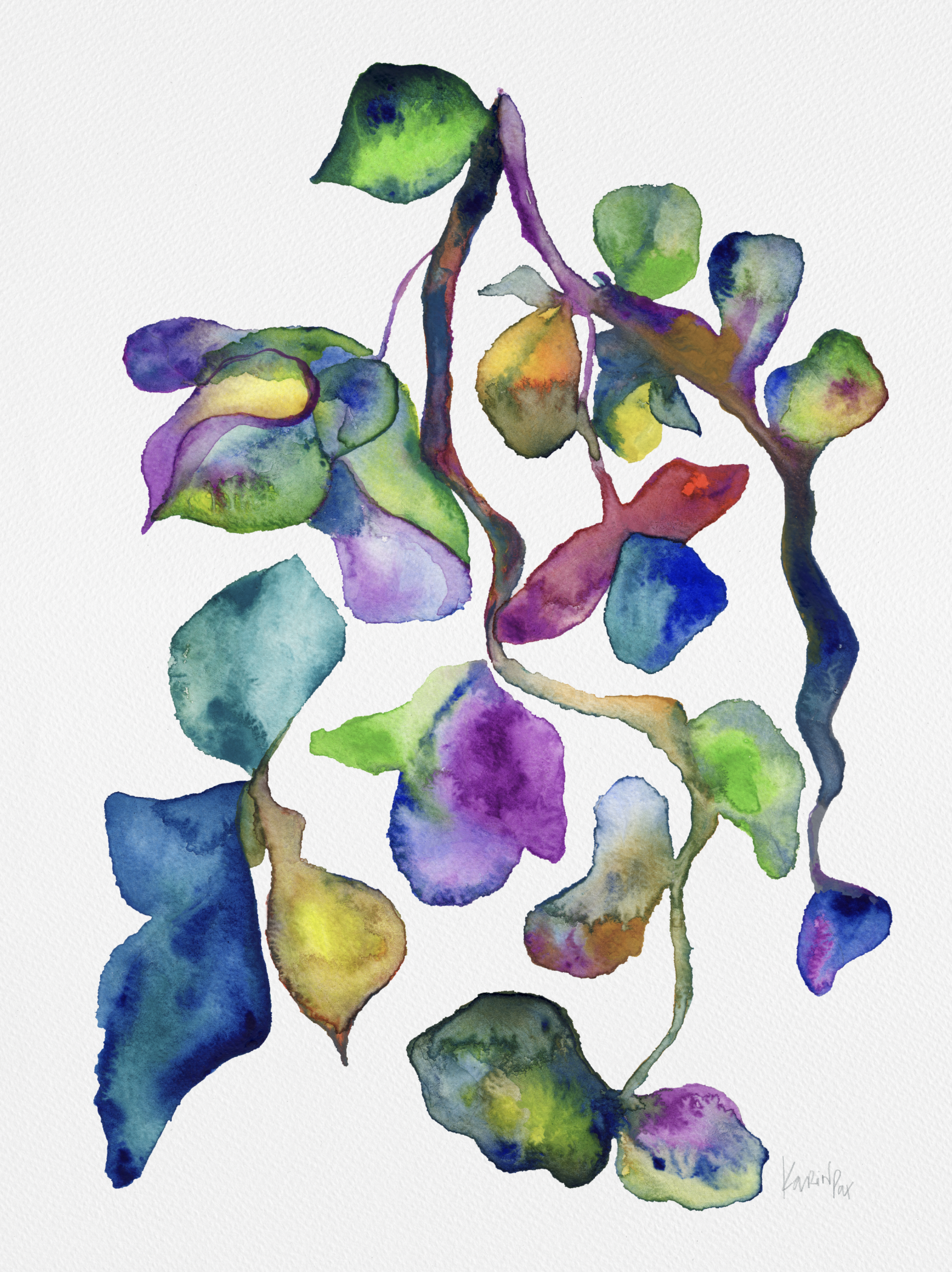
Unconscious by Karina Da Paixao Teixeira
I was bush walking and I thought: we may live between lack and loss.
I didn't plan the thought. It arrived the way thoughts do when you stop trying to have them. I kept walking. I let it settle.
Loss I can name and it has a shape. There is a before and an after. Something that was present and then became absent. You can point to the place where it was. You can build a grief around it, however long and complicated that grief turns out to be.
But what happens when the thing was never there to begin with?
There is no memory to grieve. No moment to return to. Just an absence that somehow still takes up space, still organises the way you move through the world, still shapes what you expect from other people, what you believe you deserve, what feels possible and what quietly doesn't.
That is lack. And I have been trying to understand the difference for a long time. Not just clinically. From the inside.
The hunger without a name
Pauline Boss, a family therapist who has spent decades studying what she calls ambiguous loss, gives us one way to approach this. She is writing primarily about situations where someone is physically present but psychologically absent. A parent with dementia. A partner who has withdrawn. A family member whose grief or addiction or mental illness means they are in the room but not quite there. The loss is real but it has no clean edges, no funeral, no moment of official ending. And without that, the grief has nowhere to land.
I think of ambiguous loss as one territory within the larger country of lack. Because there is a particular kind of lack that happens in childhood, when the parent is physically present, feeding you, housing you, perhaps even loving you in their own limited way, and still somehow not seeing you. Not getting to know you. Being too consumed by their own survival, or their own damage, or the family dynamics that were set long before you arrived, to turn toward you with genuine curiosity about who you are.
You were loved, perhaps. And simultaneously, you were nobody to anyone.
Both of those things can be true. That is part of what makes it so difficult to name.
A narrative
Let me bring you into something.
Maybe you lost both parents. In different stages of your life, your mother first, and then thirty years later, your father from old age. During the grief, something unexpected arrives alongside the sadness. Anger. Not the clean anger of loss, but something older and more confused.
You realise, in the grief, that they passed away without ever really knowing who you were. Not your child self. Not your adult self either. And you didn't truly know them. You never fully trusted them. There was love, you believe that, but there was also a brother who commanded the family's attention like a gravity, and parents who orbited him, and you who fought your whole life simply to exist on your own terms, to make your own choices, to not be managed or diminished or decided for.
You fought for your freedom. And you won it, mostly. But the fight left something behind.
When you were a child, you were loved. So you forgave them. You hold that. But the evidence of your life, the choices others made around you, the way you were positioned in your own family, the experience of being a stranger in the place that was supposed to be home, all of it confirmed something you had no words for yet. That you were somehow peripheral. That the central story was happening somewhere else and you were adjacent to it, watching from a slight distance, never quite at the centre of anything.
And then there was the assault. Something that happened to your body that you had no opportunity to speak about, no adult who created the space for that truth. So it went somewhere else. Into the architecture of the self. Into the way you understood what safety meant, and who could be trusted, and what you were worth.
That is what I mean by the assault on meaning. Not just what happened. What it concluded, silently, about who you were.
What the research says, and what surprises me about it
I have been reading research on experiential avoidance, the tendency to block, minimise, or refuse to integrate painful internal experience, in relation to trauma and PTSD.
What surprises me, every time I return to it, is this: avoidance itself is not the primary driver of prolonged suffering. Boeschen and colleagues found that the effect of experiential avoidance on psychological outcomes was real but small. What actually predicted PTSD severity, what explained the most variance in who recovered and who didn't, were disrupted core beliefs. The assault on meaning. The shattering of what a person had understood about safety, trust, self-worth, and their place in the world.
The wound is not primarily in the avoidance of memory. It is in what the experience concluded about who you are.
Lewis and colleagues, writing more recently, make a distinction I find useful here. They separate trait experiential avoidance, the general dispositional tendency built up over years of learning that certain feelings are dangerous, from state experiential avoidance, what you actually do in a specific difficult moment. The trait is the background hum. The state is what happens when the context demands something your system has learned not to tolerate. What their research found is that in interpersonal contexts, in situations of social and relational stress, state avoidance mediates how intensely the suffering is felt. Not in contexts of physical discomfort. In relational ones.
That is not a surprise to me. Lack is a relational wound.
The impossibility of resolving an original absence
I don't know how to resolve this section, and I'm not sure I should try.
You can grieve a loss. Grief has a shape, even when it is complicated and non-linear and arrives in waves you didn't expect. There is something to move through, even if the moving takes years.
But how do you grieve something that was never there?
Winnicott understood something about this. He wrote about the mother's emotional responsiveness as foundational, not just to the child's sense of security, but to the formation of the self. When that responsiveness is absent or inconsistent, the child doesn't just feel unsafe. The child develops around the absence. Builds a self that accommodates the gap. The true self, Winnicott would say, learns to hide. And what presents to the world is the self that learned to manage.
That managed self can be very competent, very capable, can build a meaningful life and love people and do remarkable things. I believe that. I have seen it. I have lived it. But underneath, the hunger remains. The shapeless longing for something that cannot be named because it was never experienced. You cannot remember what you never had. You can only feel its absence as a kind of pressure, a reaching that doesn't know what it is reaching for.
I notice this in the consulting room. A client who unconsciously asks too much of their child, not from selfishness but from a desperate need to be known by someone, finally, completely. The child becomes the first person they have truly hoped would see them. That is not a failure of parenting. It is the original wound finding its way to the surface through the nearest available relationship.
The research on attachment confirms what clinical observation suggests: early relational patterns shape not just how we relate to others, but how we relate to our own interior states. The insecurely attached child learns that certain feelings are not safe to have. Avoidance is not just a coping strategy. It is a relational training, beginning before language.
How to live here
I don't have a clean answer to this, and I think the absence of one is part of the truth of this territory.
The work is not primarily about recovering what was lost. With lack, there is nothing to recover. What was not given cannot be retrieved. The work is something different. It is the slow construction of a different relationship with the self. Learning to be the witness the original environment didn't provide. Learning to turn toward the absence with curiosity rather than shame, to ask, with genuine interest, what this hunger has been trying to tell you about what you need, what it has organised in you, what it has, despite everything, made possible.
I have a theory that trauma can also lead you to a meaningful life, even when the confusion still comes. I hold that from experience, not as a consolation but as an observation. The people I have known who carry the deepest lack are often also the people with the most extraordinary capacity for attention, for creativity, for the kind of empathy that comes not from theory but from having lived inside difficulty for a long time.
That doesn't make the lack worth it. I want to be careful not to say that.
But living between lack and loss is not only a story of what was missing. It is also the story of what was built in that space. What had to be invented because it couldn't be inherited.
And that, the inventing, is worth something.
The painting above is Unconscious. The leaves are still connected to the vine, most of them. But several have already drifted. Each one a different colour, a different weight. The ones at the edges have gone a deep blue, almost indigo. They let go some time ago. I painted this before I knew what this Reflection would say. I think the painting knew first.
With curiosity and care for your story,
Karina
If you're curious…
Boeschen, L. E., Koss, M. P., Figueredo, A. J., & Coan, J. A. (2001). Experiential avoidance and post-traumatic stress disorder. Journal of Aggression, Maltreatment & Trauma, 4(2), 211–245.
Lewis, M. M., Naugle, A. E., Katte, K., & DiBacco, T. A. (2024). The indirect effects of state experiential avoidance on trait experiential avoidance and negative affect in the moment. Current Psychology, 43, 6284–6296.
Boss, P. (1999). Ambiguous Loss: Learning to Live with Unresolved Grief. Harvard University Press.
Winnicott, D. W. (1960). The theory of the parent-infant relationship. International Journal of Psychoanalysis, 41, 585–595.
Fonagy, P., Campbell, C., & Luyten, P. (2023). Attachment, mentalizing and trauma: Then (1992) and now (2022). Brain Sciences, 13(3), 459.