
The Dark Is Where the Colours Meet
On shadow, colour, and what lives in the parts of us we were told were too much.
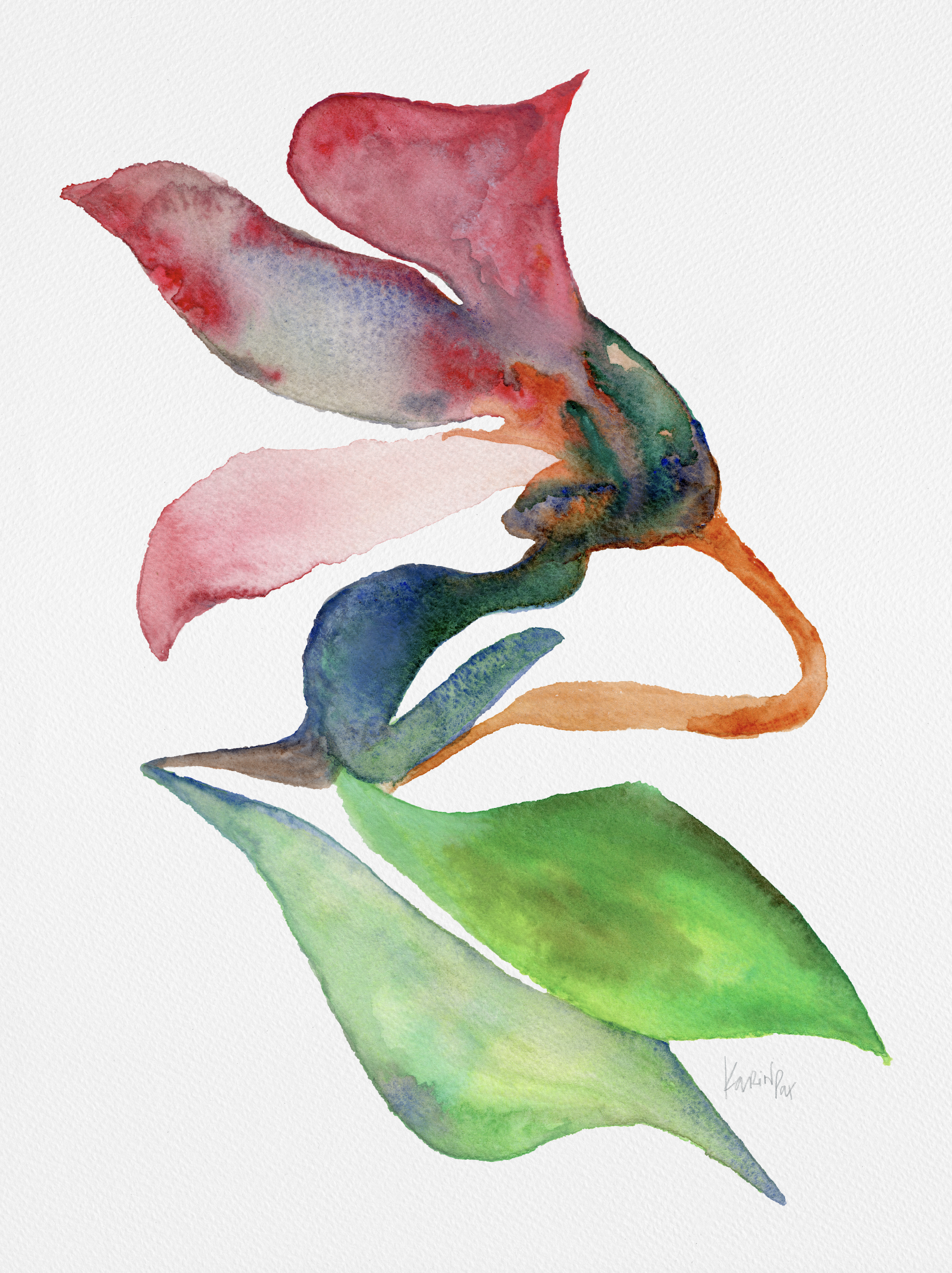
Bright Dark Shadow by Karina Da Paixao Teixeira
In all these years lived, I am starting to understand that my dark side is made of bright colours.
The dark teal and orange are holding everything together, while red and green pull away.
The dark isn't absence of colour. It's where all the colours meet.
Sometimes my art is nothing. Sometimes it is the argument. The argument made visible before I had the words for it.
This one, I think, is about the shadow.
Not shadow as darkness. Not shadow as the part of you that needs to be fixed or excavated or apologised for. Jung's shadow is everything the ego couldn't hold. Everything that wasn't safe to be. The child learns quickly, which parts of you get love, which parts get silence. The unacceptable parts don't disappear. They go underground. They become the shadow.
And here is what nobody tells you: the shadow holds your colours too.
The creativity that was too much. The ambition that wasn't appropriate. The grief that made people uncomfortable. The intensity that was always being managed down. These don't only live in the shadow as wounds. They live there as unrealised brightness. Jung called it the golden shadow. I call it the dark teal holding everything together while the red and green are still deciding whether they're safe enough to open.
I work with anger a lot. And what I keep finding underneath the anger is not badness. It's a part that was never allowed to exist in any other form. Suppressed long enough, it comes back as rage. As unconscious self-destruction. As the question: why do I keep doing this?
Making the unconscious conscious. That's Jung's provocation. Acceptance and Commitment Therapy (ACT), one of the therapeutic frameworks I work within, arrives at the same territory differently. Not through symbols and dreams but through contact. Through stopping the fight with your own experience. Through making room for the parts you've been avoiding without letting them run everything.
Both are asking the same thing: stop exiling yourself from yourself.
When I say my dark side is made of bright colours, I am not being poetic. I am describing what integration actually feels like from the inside. The rage that becomes assertiveness. The neediness that becomes the capacity for real intimacy. The ambition that stops being shameful and becomes direction.
The painting was first. The words came after.
That's usually how it works for me. And maybe that's its own kind of argument, that sometimes the right hemisphere gets there before the left. That the hand knows something the mind is still working out.
I am still working it out.
With curiosity and care for your story, Karina