
When the Body Cannot Afford to Learn
On neuroception, developmental trauma, and the children we were
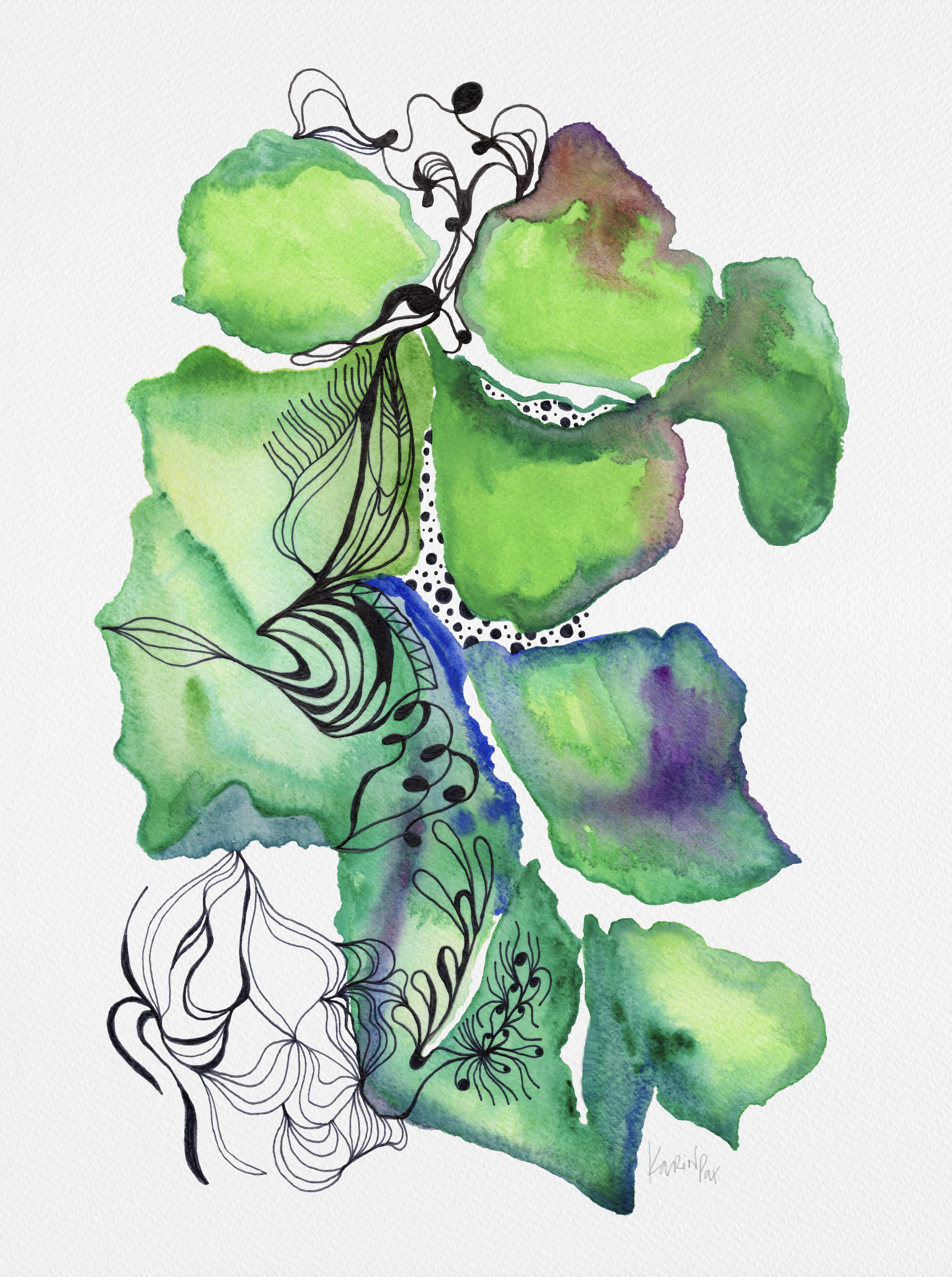
Unfinished by Karina Da Paixao Teixeira
From my experience inside the health system, and as my personal opinion, there is a question asked far too often, and it points in the wrong direction.
“What is wrong with this child?”
Every time I hear it, something in me quietly turns it over. But what happened to this child?
The two questions look similar from a distance. In practice, they lead somewhere entirely different.
One leads to a diagnosis. The other leads to a person.
Safety is not a feeling we choose to have. It cannot be just a breathing technique, or something a child can summon if they try hard enough. It is a physiological state, one that the nervous system either inhabits or does not, based on a continuous, largely unconscious scanning of the environment for cues of threat or connection.
Stephen Porges named this process neuroception. It happens beneath conscious awareness, faster than thought, reading the tone of a voice, the tension in a room, the predictability of a caregiver, the history written into the body by everything that came before. When neuroception detects safety, the ventral vagal system activates. Social engagement becomes possible. Curiosity opens. Learning becomes available.
When it detects threat, the system shifts. The body mobilises for survival. Everything that is not immediately necessary for that task, including attention, memory consolidation, the capacity to take in new information, gets subordinated to a more urgent priority.
We are not talking about dysfunction. We are talking about biology doing precisely what biology is designed to do. The nervous system is functional. It is doing the job of protecting body and mind.
The problem is that we have built schools, clinics, and systems of care that do not account for it.
I know this from the literature, and I know it from the children I sit with. But I also know it from somewhere more personal than either of those.
I was once a kid that could not concentrate or learn.
During the beginning of my high school years, my father was involved in a severe accident that left seventy percent of his body burnt. He spent nine months in hospital. My mother, managing the weight of that, was largely absent. I was twelve years old, and I was already navigating a fracturing sense of who I was and where I belonged. I sat in classrooms during that time. Teachers stood at the front of rooms and wrote things on boards. I have almost no memory of any of this time.
I was intelligent, and I was trying hard to learn. But my nervous system was fully occupied with something far more pressing than quadratic equations. It was monitoring for safety in an environment where safety had become genuinely uncertain.
That’s the thing about trauma. It is a forever monitoring. It pulls you out of the present and into the vigilant assessment of threat. You miss the lesson. You miss a lot of things.
There was also, underneath that, the earlier weight of childhood sexual abuse, which I did not find words for until forty years later. At the age of twelve, I had already taught my body certain things about threat and trust before any of this happened.
I did not know, at the time, that this had a name. I did not know it was physiological rather than personal. I thought, as many children do, that it was something about me.
What I know now is that the capacity was always there. Once there was enough safety, studying became one of the deepest pleasures of my life. Three degrees later, I am still someone who finds genuine joy in learning. The problem was never the mind. It was the conditions the mind needed in order to work.
What strikes me most about the neuroscience of traumatic amnesia is that the mind can dissolve the memory of overwhelming events for long enough to allow a life to be built. Long enough to form connections, to function, to survive. And then, when enough safety eventually arrives, even if it arrives alone and far from everything familiar, something loosens. The self that was waiting becomes available again.
A 2022 paper published in the European Journal of Psychotraumatology by Ford, Charak, Karatzias, Shevlin, and Spinazzola examined whether Developmental Trauma Disorder, a proposed childhood diagnosis that extends beyond standard PTSD criteria, could be empirically distinguished from PTSD itself. What they found, in a sample of 507 children referred by mental health and paediatric clinicians, matters enormously for how we understand the children in front of us.
This is such an important question, do you see? How do you understand the children in front of you?
In this study, they identified a distinct subgroup of children with high levels of developmental trauma symptoms and minimal PTSD symptoms. These children, dysregulated across emotional, somatic, cognitive, and relational domains, were not presenting with the classic re-experiencing and avoidance profile that PTSD criteria require. They were presenting with something that looked, on the surface, like behavioural disturbance.
And they were most likely, of all the groups in the study, to carry a diagnosis of Oppositional Defiant Disorder.
Children whose nervous systems had been shaped by emotional abuse, neglect, disrupted attachment, and chronic threat were being identified not as traumatised, but as oppositional. Not as children whose bodies had learned that the world was unsafe, but as children who were difficult. Who had a behaviour problem. Who needed management.
I will say plainly what the paper implies carefully: these children may be receiving behaviour management interventions when what they actually need is trauma-focused treatment. The two are not the same. One is working with the surface. The other works with what produced it.
This is where the polyvagal framework and the developmental trauma research speak to each other most clearly.
Deb Dana, building on Porges’ foundational work, describes the nervous system’s three states as a kind of ladder. At the top, ventral vagal activation: safety, connection, the capacity to be present and engaged. In the middle, sympathetic activation: mobilisation, hypervigilance, fight or flight. At the bottom, dorsal vagal shutdown: the freeze state, dissociation, the profound disconnection from self and environment that trauma survivors often describe as not quite being in the room.
A child in a classroom whose neuroception is reading the environment as unsafe is not idling at the top of that ladder waiting to learn. They are somewhere on the lower rungs, doing what their body has learned to do in conditions like the ones it has known. And the tragic loop is this: when a dysregulated child is met with punishment, exclusion, or escalating behavioural demands, the threat cues increase. The body goes further down, not up. The intervention designed to address the problem deepens it.
The same is true for adults living with the aftermath of domestic violence. The dissociation that can make a survivor seem absent, evasive, or unreachable in a consultation is not non-compliance and it is not indifference. It is a dorsal vagal response to a nervous system that has spent months or years in an environment of chronic, inescapable threat. The body learned to leave when leaving was the only form of protection available. It does not immediately know that the consultation room is different. It cannot take that on trust yet. Trust is something the nervous system extends slowly, when enough cues of safety accumulate over time. It cannot be instructed or demanded into existence.
This is what is meant by the phrase: safety is not administrative. It is neurobiological. Without it, the work cannot land. Not because the person is unwilling. But because the physiological state required to receive it, to sit still with it, to integrate it, is not yet available.
In my work as a nurse and as a counsellor, I carry both of these worlds with me. In a general practice setting, I see children arrive labelled. The label has often travelled some distance before they get to us. It has passed through school reports, paediatric referrals, conversations between worried and exhausted parents. By the time the word “difficult” or “defiant” or “not meeting developmental milestones” arrives in a clinical file, it has often displaced the question that should have come first.
What was happening in that child’s environment?
What did their body learn, early and repeatedly, about whether the world was safe?
Who was available to co-regulate with them when they were frightened, and what happened if no one was?
I am not a psychologist. I do not hold formal diagnostic authority in this space. But I am someone trained in both nursing and integrative psychotherapy, and I have learned that it is possible to hold a different question in the room, to name it carefully when the context allows, to offer a different frame to the clinician writing the referral. I have come to believe that holding a different question in the room is not a small thing. The frame changes what gets looked for. What gets looked for changes what gets found. What gets found changes what kind of help is offered.
Developmental Trauma Disorder is still a proposed diagnosis. It is not yet in the DSM-5. It is not yet in the ICD-11. There is currently no formal diagnostic pathway for these children in most clinical settings. Which means the gap between what the research is showing and what is actually happening in rooms with these children remains very wide.
In that gap, children are being punished for their nervous systems.
They are sitting in classrooms that read as threatening and being told they are not trying. They are being referred for behaviour management when what their bodies are asking for is something that looks more like safety, consistency, attunement, the slow and patient accumulation of cues that tell the nervous system it can come down from the ledge.
And they grow. Some of them grow into adults who do not understand why certain environments shut them down, why intimacy feels dangerous, why their body responds to ordinary stress as though it were catastrophic. They come to counselling years later and begin, slowly, to put language to something their body has known for a very long time.
In my counselling practice, I see adults carrying these children inside them. They are hurt. And I feel the need to advocate for their understanding and growth.
The work does not begin with insight. It does not begin with cognitive reframing or behavioural strategies or any of the tools that require a regulated nervous system to receive them. I think that is where some approaches to therapy lose the thread.
It begins with safety.
In mental health, safety is far more complex than administrative. Not the kind that can be ticked on a form.
The kind that the body, finally, believes.
The painting above is Unfinished. Some forms are fully arrived, colour and line together. Others are still only line, waiting for what comes next. The bottom left barely exists yet. I painted this before I knew what this Reflection would say. I think the painting knew first.
With curiosity and care for your story,
Karina
If you’re curious…
Dana, D. (2018). The Polyvagal Theory in Therapy: Engaging the Rhythm of Regulation. Norton.
Ford, J. D., Charak, R., Karatzias, T., Shevlin, M., & Spinazzola, J. (2022). Developmental trauma disorder (DTD): Empirically-based diagnosis of childhood complex traumatic stress disorder. European Journal of Psychotraumatology, 13(1), 2127485.
Porges, S. W. (2011). The Polyvagal Theory: Neurophysiological Foundations of Emotions, Attachment, Communication, and Self-Regulation. Norton.
van der Kolk, B. (2014). The Body Keeps the Score: Brain, Mind, and Body in the Healing of Trauma. Penguin.