
Reframe Within Reflections
On the difference between surviving and self-realising
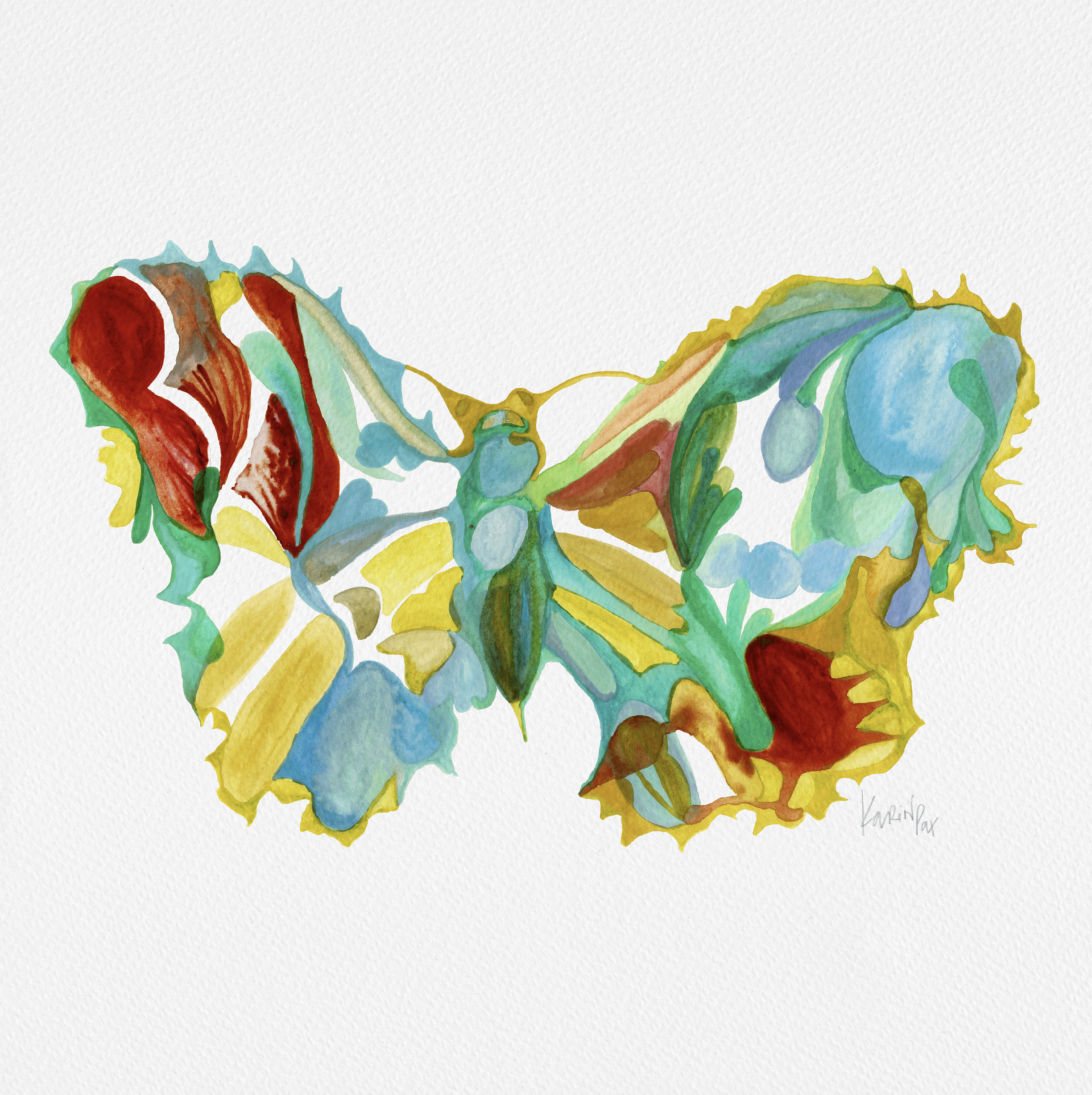
Morph by Karina Da Paixao Teixeira
Welcome to the calm disorganised chaos of my reflections. Please don't expect reflections as per scientific literature or medical framework. I do those too, but not here. This is a safe space for the exploration of self, and to bring empathy to the confusion, because I want to show and observe a process. The writing helps me with the discipline of ongoing evaluation and regulation.
Although based on multiple research papers, because I love reading them, what I write here is probably just my opinion, so take it as food for thought rather than clinical guidance. I am doing this because I have to do it. The same way I listen to the urge to draw or paint something, when I feel it, I have to do it. Counselling as a practitioner illuminates my curiosity for universal human experiences, and I will discuss what my heart wants to put into words.
This week, something surfaced in a conversation with a client that I keep returning to: the difference between surviving and self-realising. I believe in creativity as a way of processing and understanding, and I say that from both sides of the therapeutic relationship.
There are stages. First, you may act in response to trauma, always reacting in survival mode. But I don't really believe that it is all wrong with that. Because as we try to escape, sometimes we also build a meaningful life. By trying to leave a toxic environment behind, even if you don't know what you are doing, you can end up living in different countries, choosing challenge and growing. Later, when we are ready, we do the deeper work. The parts that have been keeping us from fully living our own story. I know it is confusing. That's why reflective thinking and creative practice help.
I have a rich background of professional experiences and adverse events, and I was encouraged by my own inner child to follow my interests with full power and courage. Architecture taught me structure and problem-solving. Nursing gave me practical resilience and the ability to stay emotionally regulated when complex problems arise. A life woven through art, fashion, and design has kept my creativity alive. I rebuilt myself in a country not my own, not once but many times.
These aren't credentials I list. They are the different survival modes I moved through. I believe that becoming a counsellor gave me language to everything I understood from the inside. And that language, that finally having words for the interior life, is part of what self-realisation feels like.
I read, I write, I draw, I paint, I rewrite, I read more, and I find myself enchanted by my own system. I could say this system was put in place as a goal a long time ago, but it is not true. Once, this system was part of a survival strategy. A way to survive childhood.
I listen to feelings and observe my flow, what makes me feel in a state of contentment and like myself, and more or less that is how I established a protective system. Protection for my mental and physical health. And I encourage clients to develop their own tools, because when it feels true to yourself, when you are not forcing, the change happens.
Change is not a clean line. People come to counselling carrying the weight of who they've been, uncertain about who they are becoming. That uncertainty is not a problem to fix. It is the investigation itself.
So, I invite you to meet the wonder, allow it, rather than living in judgment of it. It is worth it, your self-realisation.
We are transformation, morphing into something else. Beautiful imperfections.
The painting above is Morph, my own watercolour. The butterfly mid-dissolution, colours bleeding into each other, not quite one thing yet. That's the space this reflection lives in.
With curiosity and admiration of your emotional and cognitive exploration,
Karina