
The Fear Beneath the Ritual
On OCD, uncertainty, and what becomes possible when we name what is really happening
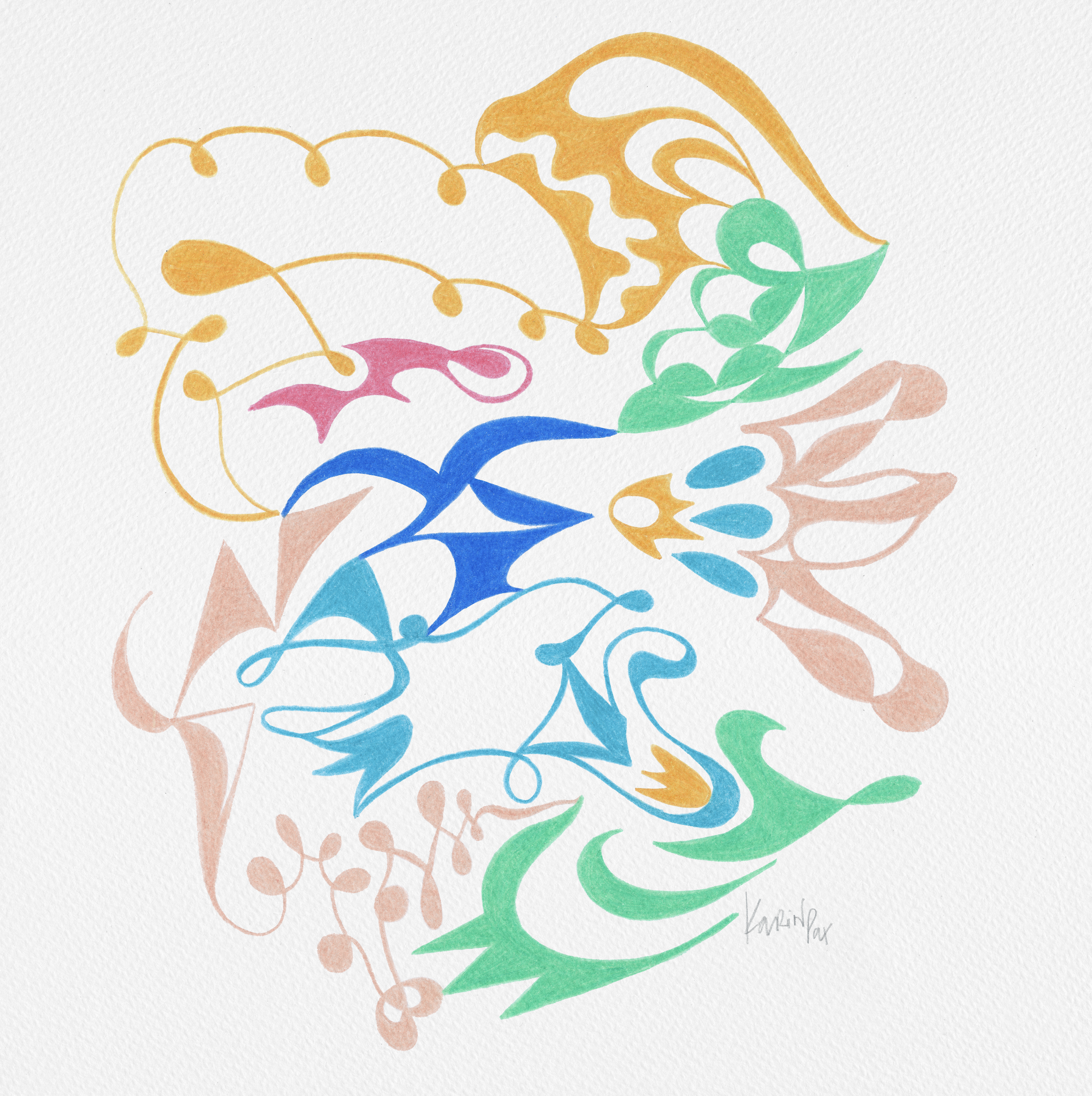
Finding Hope by Karina Da Paixao Teixeira
There is something that happens in the body before the ritual begins.
Before the checking, the counting, the returning to make sure. Before the thought that arrives uninvited and refuses to leave. Before all of it, there is a sensation. Urgent, relentless, impossible to reason with. Most people who live with OCD know this sensation intimately. Many have spent years trying to make it stop.
We call it anxiety. And we are not wrong. But there is a question I keep returning to in my clinical work, one that I think changes something important about how we understand what is actually happening.
What if the root is not anxiety? What if, beneath the anxiety, there is something older and more specific?
What if the root is fear.
Anxiety and fear are not the same thing
This distinction matters more than it might initially seem.
Anxiety is diffuse. It spreads across situations, across time, across possibilities. It is the hum of threat that colours everything without always having a precise object.
Fear is different. Fear has a target. It is the nervous system’s response to something it has learned is dangerous, whether or not that danger is real in the present moment. Fear says: this is the thing. This is what we must not let happen.
In OCD, that thing is usually uncertainty itself.
Chris Brewin’s dual representation theory, which I wrote about in my previous Reflection on intrusive memories, helps us understand why certain fears become lodged in the nervous system rather than processed and filed away. The same mechanism that keeps traumatic memories alive in the body operates in OCD. The amygdala, our threat detection system, has learned that uncertainty equals danger. And it responds with everything it has.
The compulsion, then, is not irrational behaviour. It is the nervous system’s most logical solution to an intolerable feeling. If I check one more time, I will know. If I repeat this sequence, the fear will ease. If I can be certain, I will be safe.
And it works. Briefly. Which is exactly why it continues.
What the ritual is protecting
I want to say something here that I think gets lost in most clinical descriptions of OCD.
The fear is not the enemy.
It is a protector. A part of the self that learned, somewhere along the way, that uncertainty was dangerous. That not knowing was not safe. That vigilance was necessary for survival. This part is not broken. It is loyal. It is doing exactly what it was shaped to do.
The compulsion is an act of loyalty to that frightened part. And before we can ask someone to give it up, I think we have to honour what it has been trying to do.
When I sit with clients who carry OCD, what I find most useful is not to fight the fear or to talk them out of it. It is to turn toward it with genuine curiosity. To ask: what is this part of you trying to protect? What does it believe will happen if the certainty is not achieved? What is the original wound beneath the ritual?
These are not easy questions. But they are worth asking. Because when the fear is finally seen, really seen, not as an enemy to be defeated but as a signal worth understanding, something begins to shift.
The joy of a different relationship
There is something that becomes possible when you stop treating your own complexity as a problem.
We are not simple. We are not supposed to be. The parts of us that developed compulsive patterns, intrusive thoughts, ritualised behaviour, these parts were responding to something real. They deserve to be met with the same compassion we would offer anyone who learned the wrong lesson under difficult conditions.
When a client begins to turn toward their fear with curiosity rather than combat, something opens. Not immediately. Not linearly. But gradually, the investigation itself becomes interesting. The question shifts from “why am I like this” to “what is this telling me about myself.” And that shift, from self-judgment to self-curiosity, is where something genuinely new becomes possible.
This is what I mean when I say that psychological exploration can be a source of joy. Not because the work is easy. But because knowing yourself, really knowing yourself, is one of the most meaningful things a human being can do.
The fear beneath the ritual is not your enemy. It is an invitation. To look. To understand. To meet the parts of yourself that have been working very hard, for a very long time, to keep you safe.
They are worth knowing.
This drawing is the source of the pattern I used in my previous Reflection. The original before the repetition. That felt right for a post about what lives beneath compulsive behaviour, something fluid and alive, waiting to be recognised.
With curiosity and care for your story,
Karina
If you’re curious...
Brewin, C. R. & Holmes, E. A. (2003). Psychological theories of posttraumatic stress disorder. Clinical Psychology Review, 23(3), 339–376.
van der Kolk, B. (2014). The Body Keeps the Score. Penguin.
Abramowitz, J. S. et al. (2023). Cognitive-behavioral therapy for obsessive-compulsive disorder. Psychiatric Clinics of North America, 46(1), 167–180.
Eisenbeck, N. et al. (2024). Intolerance of uncertainty as a cognitive vulnerability for obsessive-compulsive disorder. PMC.